


The Okavango Delta, the largest inland wetland in the world is located in northwest Botswana close to the borders with Angola and Namibia. It is popularly referred to as the “jewel of the Kalahari Desert” for being a crucial water source in the middle of the dry Kalahari.
The Okavango River, which starts in the highlands of Angola supplies water to the Delta. The river flows through Namibia and finally spreads out in the Kalahari Desert of Botswana. The Okavango Delta was formed through a mixture of tectonic shifts and river flow patterns. Due to this, the river was trapped in the low lying area. Unlike most rivers that flow into oceans, lakes, or seas, Okavango River ends in the desert where its water spreads out into channels, lagoons, islands, and floodplains which lead to formation of the inland delta. However some flood water flows into Lake Ngami.
The river floods the Delta each year between May and September, which is Botswana’s dry season. During this period, the Delta is full of water and draws many animals and birds when the rest of the area is dry. The size of the Okavango Delta changes with the seasons, for instance, it can cover more than 15,000 square kilometers big during the dry season and more than 22,000 square kilometers big during the flood season.
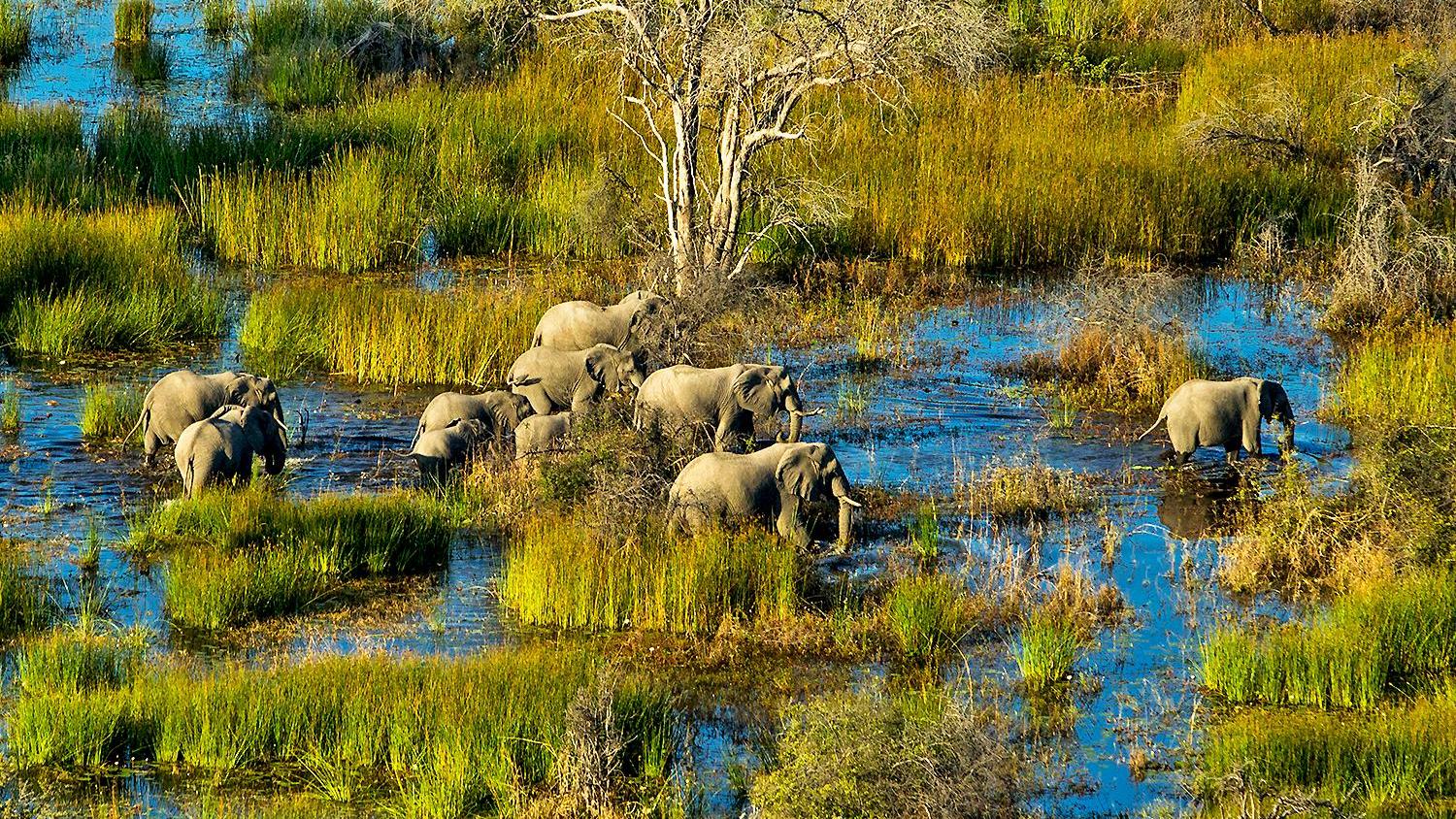
The Okavango Delta is recognized as a conservation area, but it expanded further in 1963 when the local Batwana people, led by Chief’s widow Elizabeth Pulane Moremi, established the Moremi Game Reserve. As a result, Moremi became the first reserve in Africa established by a local community, protecting a large portion of the Delta. In 2005, the Delta and Hwange National Park were recognised as Lion Conservation Units. In 2013, the Okavango Delta was named one of the Seven Natural Wonders of Africa in Arusha, Tanzania. The following year, in 2014, it was declared a UNESCO World Heritage Site.
People of Okavango Delta
The Okavango Delta is home to five ethnic groups: the Bayei, Hambukushu, Basubiya, and the Banoka (River Bushmen). Every ethnic group has its unique set of traditions, customs, and history. 4.Over time, Delta inhabitants have frequently moved from one place to another in search for better resources so as to improve their livelihoods, or to escape difficulties such as human and livestock diseases, droughts, floods, and conflicts.
The Bayei came to the Delta in the 1700s and are remembered for introducing the mokoro, the dugout canoe that is still used today. They are good at farming and fishing in the wetlands. The Hambukushu are farmers and fishermen too, planting crops such as maize, millet, and sorghum on the fertile soils left by the floods. They also rely on plants for food, medicine, and building materials.
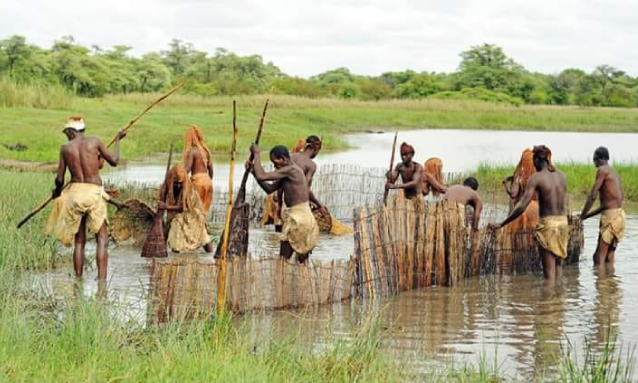
The Basubiya are mainly river people who keep cattle, do fishing, and farm along the waterways. The Banoka, also known as the River Bushmen, are the earliest known inhabitants of the Delta. They were hunter-gatherers but later became expert fishermen and mokoro polers, with deep knowledge of the animals, plants, and waterways.
These communities have very significant cultural traditions, such as telling stories, making music, dancing, and building things by hand. Women are well known for weaving beautiful baskets and mats from palm leaves and reeds, while men focus on fishing, and in the past, hunting and other traditional survival skills. Elders play an important role by passing down knowledge about the land, wildlife, and customs to younger generations.
Cultural leadership in the Okavango is organized mainly through chiefs (known locally as “kgosi”) and headmen, who are highly respected figures in their villages. Chiefs are in charge of leading their people, settling arguments, keeping traditions alive, and looking after community land and resources. They are seen as custodians of both the culture and the environment. Elders also hold an important leadership role by keeping oral history alive, leading rituals, and teaching values of respect for nature and community life. However, the Okavango Delta has been under the political control of the Batawana, a Bantu ethnic group native to Southern Africa since the late 18th century. They are led by the house of Mathiba I, leader of Bamangwato.
Flora in Okavango Delta
The flora of the Okavango Delta is shaped by the combination of permanent waterways, seasonal floodplains, and dry islands. The Delta has about 1,068 plant species. For example; papyrus reeds (Cyperus papyrus), common reeds (Phragmites australis), and bulrushes grow in the permanent channels, lagoons, and swamps. These plants thrive in slow moving waters that are not too deep and they are mostly found growing along the edges of channels. They play an important role in filtering water and also provide shelter for aquatic insects and water birds.
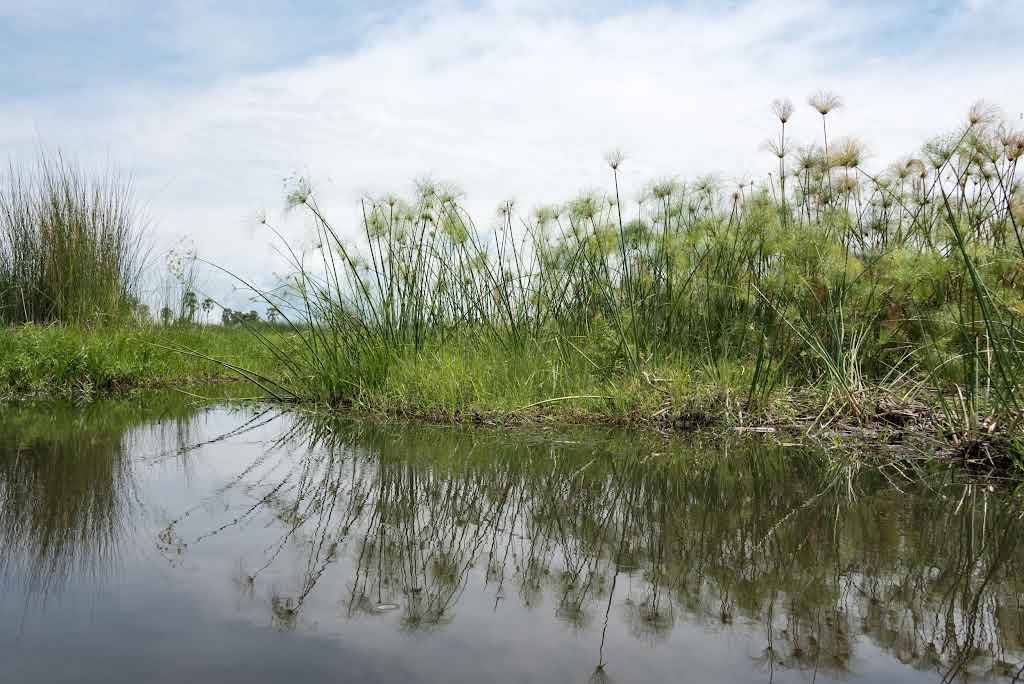
Floating plants like water lilies (Nymphaea nouchali) are also present. The seasonal floodplains are covered with grasses like couch grass (Cynodon dactylon), Kalahari sand grass, and sedges. This vegetation type is a grazing area for herbivores like lechwe, sitatunga, buffalo, and elephants which also attract predators. On the islands and mainlands, there is a mixture of real fan palm (Hyphaene petersiana) and Acacia tree. Other trees in the delta include; Mopane trees (Colophospermum mopane), African mangosteen, jackalberry (Diospyros mespiliformis), and sausage tree (Kigelia africana).
Fauna of the delta
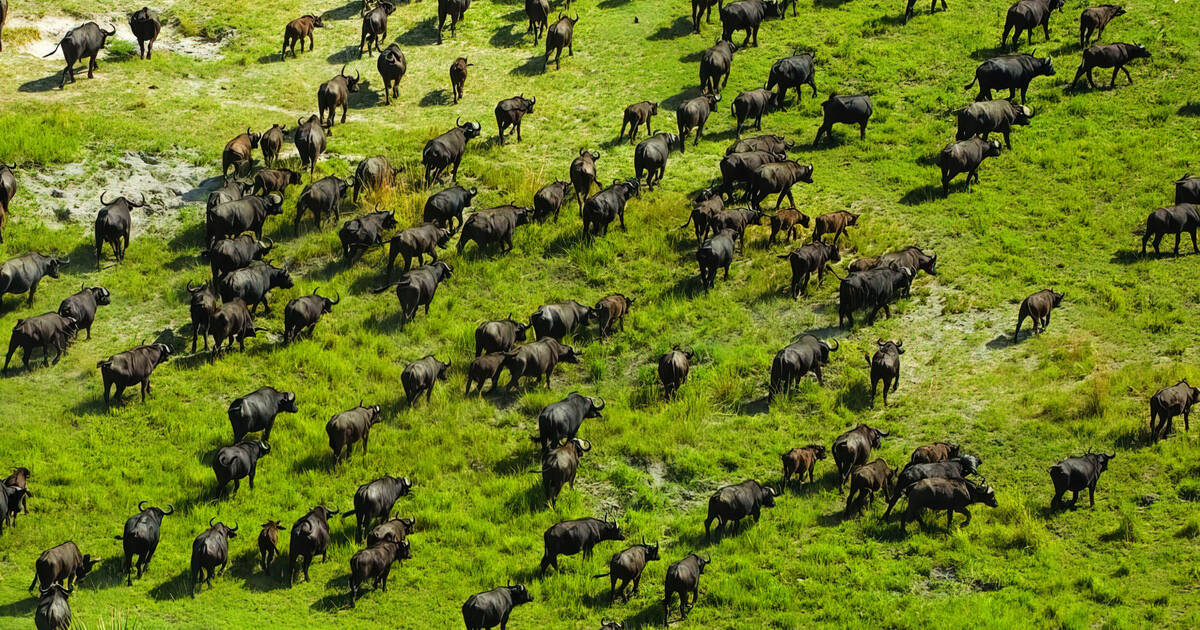
The Okavango Delta hosts over 400 bird species, 150 mammal species, different reptiles and amphibians and more than 70 types of fish. All the big five game animals; elephants, buffaloes, lions, leopards, black and white rhinos are present. The semi-aquatic mammals like the red lechwe and sitatunga antelope are also present. Other species include zebras, blue wildebeests, giraffes, puku, impala, common eland, greater kudu, roan antelope, waterbuck, sable, tsessebe, aardwolf, spotted hyena, aardvark, bat-eared fox, black-backed jackal, cheetah, African wild dog, caracal, African savanna hare, serval, honey badger, crested porcupine, common warthog, chacma baboon, vervet monkey, Nile crocodile and hippopotamus.
The delta also hosts over 400 bird species and these include; South African shelduck, helmeted guineafowl, southern ground hornbill, African skimmer, African fish eagle, African spoonbill, Pel’s fishing owl, African jacana, Egyptian goose, wattled crane, African darter, secretary bird, lilac-breasted roller, marabou stork, crested crane, and common ostrich. The waterways are rich with fish such as tigerfish, tilapia, African pike, African sharptooth catfish, and sickle barb whose breeding cycles follow the annual floods. These fish can also be found in Zambezi River.
Activities offered in Okavango Delta
Game drives
Game drives in the Okavango Delta are conducted in 4×4 safari vehicles allowing visitors to have unobstructed views for animals. Drives usually happen early in the morning and evening game drives when animals are still active. However, some lodges conduct night game drives which offer a chance to spot nocturnal animals like bushbabies, genets, civets, porcupines and predators. During game drive visitors spot animals like elephants, buffaloes, giraffes, zebras, blue wildebeests, African wilddog, cheetahs, hippos, lions, leopards, among others.
Bird watching
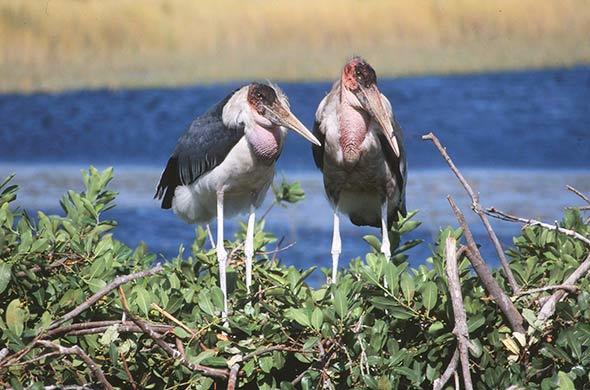
Bird watching in the Okavango Delta is done in wetlands, woodlands, floodplains, and islands. The delta is a home to 400 bird species and these include; helmeted guineafowl, African skimmer, African fish eagle, African spoonbill, Pel’s fishing owl, lilac-breasted roller, Egyptian goose, wattled crane, South African shelduck, African darter, African jacana, secretary bird, marabou stork, martial eagle, crested crane, southern ground hornbill, Meyer’s parrots, woodland kingfishers, pelicans, raptors, bitterns, warblers, and common ostrich. The delta’s seasonal floods attract migratory birds like; European bee-eater, carmine bee-eater, and woodland kingfisher.
Cultural experience
Okavango Delta is a home to five ethnic groups each with its own ethnic identity and language. These ethnic groups include; Bayei, Basarwa, Hambukushu, Dceriku and Bugakhwe. Cultural visits offer visitors a chance to learn about the tradition of the local people. Visitors participate in different activities like music and dance, craft making, basket weaving which are made from mokolwane palm leaves, among other activities.
Helicopter flights experience over the delta
This experience in the Okavango Delta offers stunning views of the Okavango Delta’s intricate waterways, seasonal floodplains, lagoons, and wildlife. The flights use helicopters with doors off for unobstructed photography and views. The activity usually takes 30 to 60 minutes and is arranged by the lodges. From above, visitors are able to spot herds of elephants, buffaloes, crocodiles and hippos. This activity is more reading during the flood season months of May to August.
Fishing
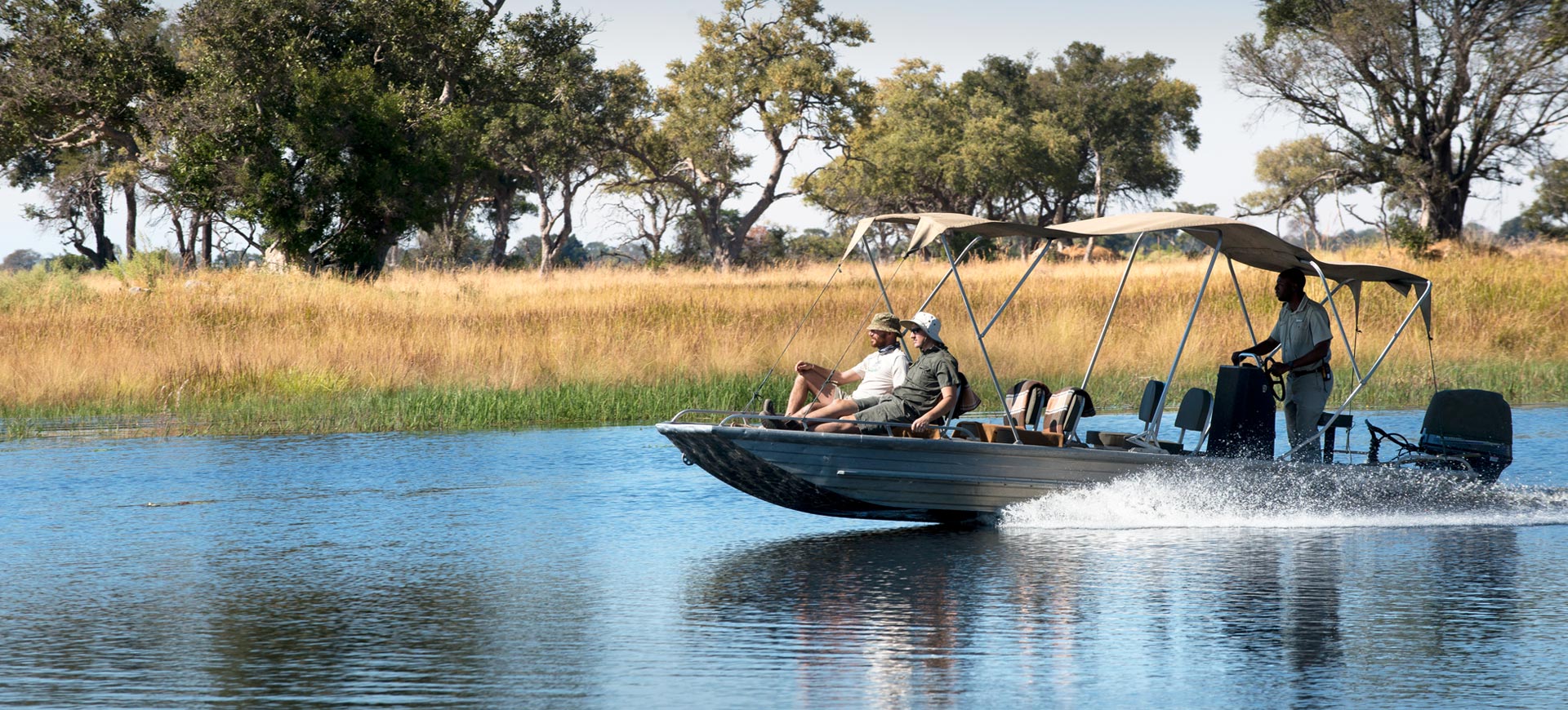
Okavango Delta offers seasonal fishing expeditions which are led by locals who know the best spots and the traditional fishing methods. The delta is home to many types of fish, including bream, tigerfish, catfish, and tilapia. Fishing equipment are always offered by the lodges and guidance on catch and release fishing excursion.
Mokoro safari
One of the best ways to explore the Okavango Delta is on a mokoro safari. This activity offers visitors a chance to sail through narrow channels, reed lined waterways and lagoons on traditional dugout canoe. The Mokoro safari is led by skilled guides who know the waterways. Along the safari, visitors are able to spot animals like elephants, hippos, crocodiles, and red lechwe.
Walking safari
Walking safari is one of the best ways to explore wilderness in Okavango Delta. The activity is led by armed guides and offers a chance to visitors to see small details often missed on safari vehicles like plants, insects, animal tracks, and birds. Along the way you might also see large animals like elephants, buffaloes among others. Walking safaris are always conducted in private areas where few people can visit.
Best time to visit Okavango Delta
The best time to visit the Okavango Delta is in the dry season between May and October. During these months, water levels are lower, and animals gather around the remaining water sources, making wildlife easier to spot. The weather is also cooler and more comfortable for activities like game drives, mokoro rides, boat cruises, and walking safaris.
The wet season, from November to April, brings higher water levels and lush scenery, which is great for birdwatching and seeing the delta in full flood, but wildlife can be more spread out and harder to find.
Accommodation in Okavango Delta
Accommodation in the Okavango Delta ranges from luxury lodges and tented camps to more basic safari camps, catering to different preferences and budgets. Many lodges are located on private concessions or islands, providing exclusive access to wildlife. Some of these lodges include; Xigera Safari Lodge, Belmond Eagle Island Lodge, &Beyond Sandibe Okavango Safari Lodge, Duba Plains Camp, Moremi Crossing, Pom Pom Camp, Delta Camp, Qorokwe Camp, Atzaró Okavango among others.