


Nile River cruises offer a flexible way to explore Upper Egypt, featuring options between traditional Dahabiya sailboats and large, amenity-rich cruise ships, with the main routes operating between Luxor and Aswan. Large ships follow strict, fast-paced itineraries with numerous amenities. Dahabiyas provide a more intimate, slow-paced experience that can reach smaller, remote sites. The best time to visit is October through April, avoiding the extreme heat of summer, which makes temple exploration difficult. There are two types of vessels to choose from for your Nile river cruise holiday which include traditional dahabiya sailboats and large motor cruise ships.
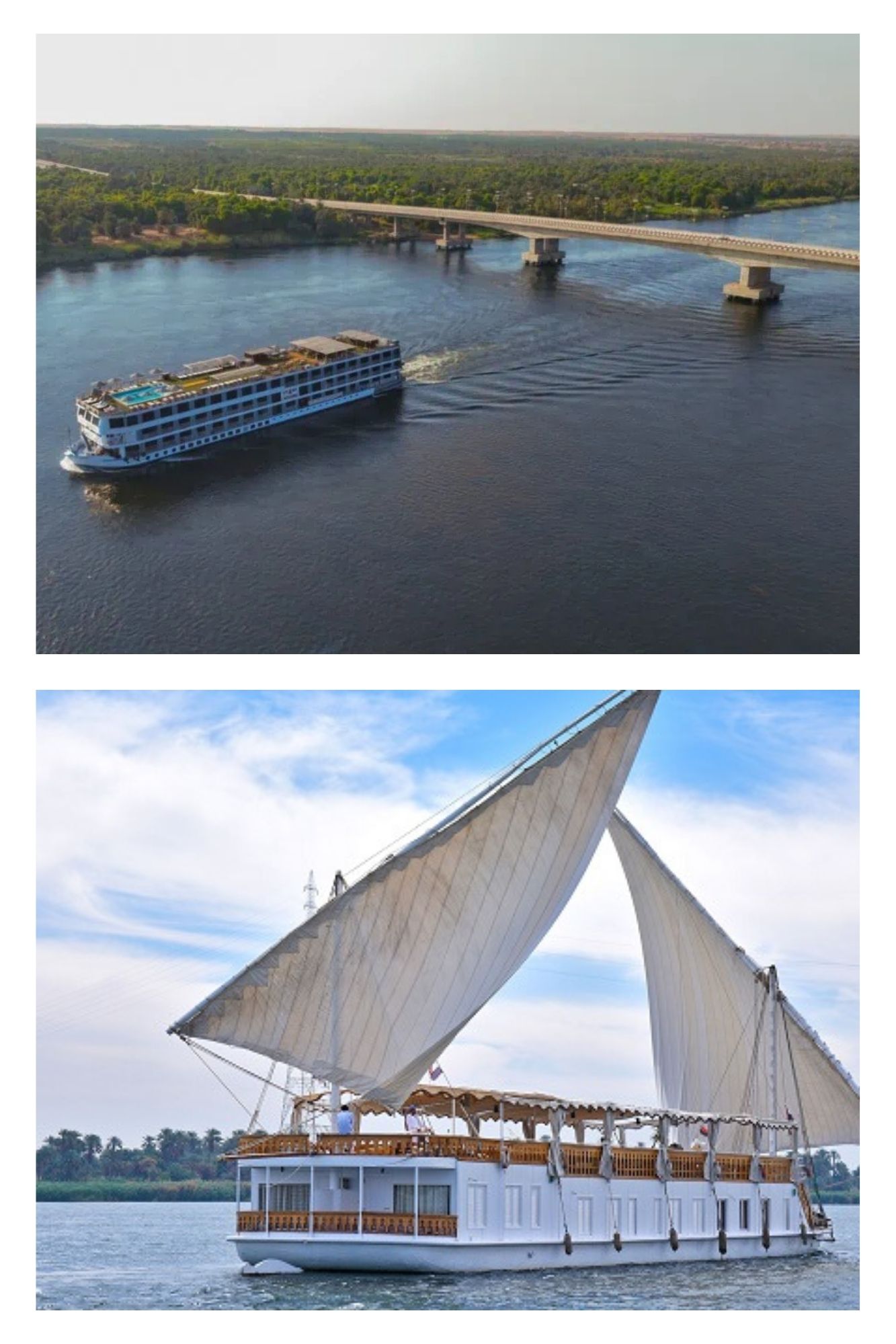
Motor cruise ship vs Traditional Dahabiya
Traditional Dahabiyas
Dahabiyas are relatively smaller two-level wooden vessels that rely primarily on twin-masted sails to navigate the river. These boats can accommodate 8 to 20 guests. When wind currents drop, a support tugboat tows the vessel from a distance, keeping a quiet atmosphere onboard. Their size allows them to dock anywhere including at smaller islands and rural villages where the larger cruise ships can’t reach. The lower deck houses air-conditioned, luxury private bedrooms with large viewing windows and en-suite bathrooms. High-end Dahabiyas also feature exclusive suites with private balconies. Dining is a family-style experience, with an onboard kitchen and private chef preparing fresh meals from local ingredients daily.
Motor Cruise Ships
Cruise ships are large, engine-operated vessels built to accommodate between 100 and 300 passengers across multiple expansive decks. The ships move on a pre-scheduled and are perfect for those intending to experience the golden age of river travel paired with modern resort amenities onboard including spacious air-conditioned suites, cocktail lounges, and open-air restaurants serving multi-course meals. The top deck features swimming pools and sun loungers. Some operators feature onboard Egyptologist guides who deliver informative lectures about attractions as the ship sails.
Nile River Cruise Routes
The classic Nile route operates between Luxor and Aswan and both ship types sail in both directions, so your choice depends entirely on your broader arrival logistics and what you intend to see and do. Each city offers a unique vibe and ancient Egyptian monuments. like Karnak, the Valley of the Kings, Edfu, Kom Ombo, and Philae.
Aswan to Luxor (Northbound / Downstream)
Sailing with the river current makes this direction relatively faster. It is the most common route for pre-packaged holiday itineraries. It pairs perfectly with travelers who take a domestic flight from Cairo straight to Aswan to begin their journey.
Luxor to Aswan (Southbound / Upstream)
This direction sails against the current, requiring a slower, more deliberate travel pace. It fits independent travelers arriving in Luxor via the overnight train or a direct flight from Cairo. It allows you to end your trip in Aswan, which has a quieter, more relaxed atmosphere.
Sailing Times
Large cruise ships comfortably cover the distance in 3 to 4 nights, while a 5-night sailing offers a more relaxed schedule. Conversely, Dahabiyas move slowly, typically starting or ending at the ancient town of Esna (60km south of Luxor). A downstream Dahabiya trip takes 4 to 5 days, whereas sailing upstream against the current takes over 5 days.
How Sightseeing Works on the Water
Daily shore excursions allow guests to tour ancient Egyptian monuments alongside certified, English-speaking Egyptologists. Large cruise ships daily schedules follow a strict timeline. The ship docks for a few designated hours at each attraction or temple, and guests must return on time before the vessel departs. You can join the ship’s larger tour groups or hire a private guide to meet you at the gangway. Transport from the dock to inland temples involves short taxi rides or traditional horse-drawn carriages depending on how far the site to visit is from the dock.
Dahabiya sailboats sightseeing is flexible as they combine fixed temple stops with custom visits to off-the-beaten-path sites, rural island walks, and private beach dinners under the night sky. Those intending to charter an entire vessel as a family or group, the itinerary is completely customizable. Solo travelers or small couples booking single cabins will follow the operator’s preset schedule.
Best Time to Cruise
The winter months from October through April offer the most comfortable weather for Nile river cruises. December and February mark the peak season, which is associated with higher pricing and larger crowds at the temples. October and November offer excellent value with cooler weather before the winter rush. Avoid summer cruises (June to August) if you dislike extreme heat; daytime temperatures in Upper Egypt regularly exceed 40°C, making midday temple walking exceptionally exhausting.
What is Included
Most Nile cruise packages are sold on a full-board basis and include all onboard meals (breakfast, lunch, and dinner), cabin accommodation, a dedicated English-speaking Egyptologist guide, and group transfers from the airport or train station to the docks.
What’s Not Included
Entrance tickets to individual temples and tombs (double-check if your agent includes these), alcoholic beverages, bottled water, and optional top-up excursions like hot-air balloon rides over Luxor or a side trip to Abu Simbel Temples.