


Scuba diving Egypt’s Red Sea offers premier world class diving with crystal-clear water that provides unmatched visibility of coral reefs and diverse marine life. Divers can choose between easy to reach on-shore resort towns and remote off-shore islands. Every diving trip is supported by strict safety and guiding standards.
The Red Sea, one of Egypt’s best destinations, maintains a highly saline and is warm environment given that it has no river inflows. Its unique marine ecosystem thrives in this arid climate. Water temperatures remain stable between day and night, ranging seasonally from 21°C in winter up to 29°C in summer. Coastal sites offer calm, protected conditions and remote offshore sites feature strong oceanic currents that attract large open sea species. This variation allows travelers to easily combine comfortable on-shore day trips with adventurous multi-day offshore liveaboard itineraries. Water conditions tend to fluctuate throughout the year and when you plan to visit, it’s good to find out the best routes for your diving trip.
On shore vs off-shore diving hubs
Egypt categorizes its Red Sea scuba diving sites as on-shore hubs and remote offshore marine parks. On-shore sites are located close to the mainland. Divers can reach reefs via daily boat trips or direct shore entry when staying in traditional hotels. Off-shore sites comprise isolated reefs, open-ocean islands, and deep-sea shipwrecks. These can be reached through a multi-day cruise ship known as a liveaboard.
Onshore and day trips on the Red Sea Egypt include Sharm El Sheik, Harghuda and Dahab explained as follows:-
Sharm El Sheikh
Situated at the southern tip of the Sinai Peninsula, this hub offers expansive sandy beaches and diverse resort accommodations. Sharm serves as the primary gateway for day trips to Ras Mohammed National Park and the Straits of Tiran.
Hurghada
A major coastal city stretches across 40 km of the Red Sea shoreline. The city features distinct districts tailored to different travel styles which include El Dahar offering an authentic experience with its historic harbor, fishing village, and traditional markets. Al Sakkala and the Hurghada Marina serve as the energetic central hub, famous for bustling nightlife, modern restaurants, and daily dive boat departures. Further south, El Mamsha features a long pedestrian promenade lined with premium beachfront resorts.
Dahab
Located 85 km (1-hour drive) north of Sharm El Sheikh, Dahab delivers a laid-back, bohemian atmosphere centered around budget-friendly beach camps and boutique hotels. It is globally famous for its rugged, windsurfer-friendly coastline and dive sites, including the legendary Blue Hole and The Canyon.
Off-Shore Marine Parks (The Golden Triangle)
Egypt’s premier open sea encounters happen far from the coast in a remote, protected national park zone. Known collectively as the “BDE” circuit (Brothers, Daedalus, Elphinstone), these open-ocean seamounts feature sheer vertical walls, volatile currents, and deep drop-offs. They are strictly reserved for advanced divers and are primarily reached via 7-night liveaboard safaris.
Daedalus Reef
This isolated reef sits roughly 90 km east of Marsa Alam, almost halfway to Saudi Arabia. An iconic 19th-century lighthouse marks the site. Below the surface, steep walls plunge into depths exceeding 400 metres. Daedalus is globally famous for predictable summer encounters with large, schooling scalloped hammerhead sharks. Strong oceanic currents also attract manta rays, threshers, and enormous schools of barracuda.
El Ikhwa Islands
Located 67 km offshore from El Quseir, these two distinct volcanic rocks Big Brother and Little Brother rise from the deep ocean floor. Big Brother features two historic, coral-encrusted shipwrecks: the SS Numidia and the Aida, resting on a near-vertical slope. Little Brother is completely wild and densely covered in massive gorgonian fans and black corals. Both islands host dense concentrations of predatory marine life, including grey reef sharks, thresher sharks, and curious oceanic whitetips.
Elphinstone Reef
The Reef at Elphinstone is 12 km off the coast of Marsa Alam and is a narrow, cigar-shaped reef. It is the only off-shore site occasionally that can be reached via high-speed Zodiac boats from the mainland. The reef stretches north to south, dropping vertically into a sinkhole on both sides. Elphinstone is famous for its resident oceanic whitetip sharks (Carcharhinus longimanus), which confidently cruise alongside divers along the southern plateau. Unpredictable, high-velocity drift currents push massive schools of trevally, tuna, and reef sharks past the wall.
The Deep South
Located near the Sudanese border, the Deep South represents Egypt’s most pristine and least crowded marine frontier. These sites feature untouched coral health and highly diverse underwater topography. They require a long overnight sail from Port Ghalib or Hamata and are exclusively accessed via liveaboard.
Fury Shoals
This massive network of 20 interconnected reefs offers excellent diving for all experience levels. Sites like Sha’ab Claudio feature shallow, light-filled cavern systems and swim-throughs that are easily navigable. At Sha’ab Sataya, also known as the Dolphin Reef, a resident pod of spinner dolphins frequently interacts with snorkellers and divers in the protected lagoon.
St. John’s Reef System
Covering a 290-square-kilometre offshore plateau, St. John’s sits at the absolute southern edge of Egyptian waters. Sites like Habili Ali and Gota Soraya feature sheer vertical walls dropping into the abyss. Constant black-water currents push past these walls, bringing frequent encounters with hammerheads, oceanic whitetips, and grey reef sharks.
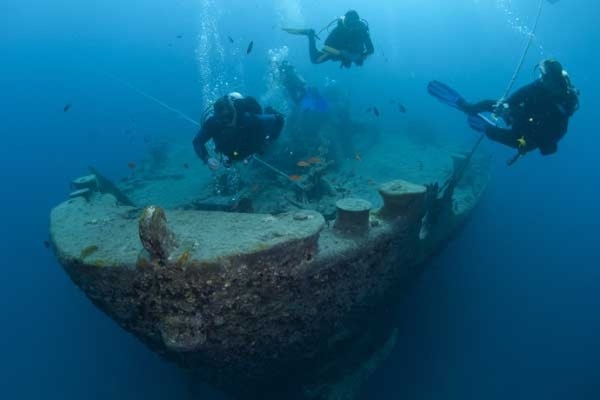
SS Thistlegorm Ship Wreck
The SS Thistlegorm Wreck
The SS Thistlegorm is widely rated as the world’s premier military shipwreck dive. This 128-metre British armed merchant ship was carrying war supplies to Allied forces when German Heinkel bombers sank it in 1941. The wreck rests at a recreational depth of 18 to 32 metres in the Straits of Gubal. The ship serves as an intact, underwater World War II museum. Divers can swim through open cargo holds to see rows of Bedford trucks, Morris cars, Norton and BSA motorcycles, Bren guns, crates of rifles, and aircraft wings.
The force of the explosion threw two massive Stanier 8F steam locomotives off the deck. They now sit upright on the muddy seabed alongside the main hull. The site serves as an artificial reef, attracting giant moray eels, schools of barracuda, crocodile fish, and sea turtles. However, the open channel frequently experiences fierce currents reaching up to 2 knots. There are 4:00 AM day boats that operate from Sharm El Sheikh, however, booking a mini-liveaboard remains the best way to dive the wreck before the daytime crowds arrive.
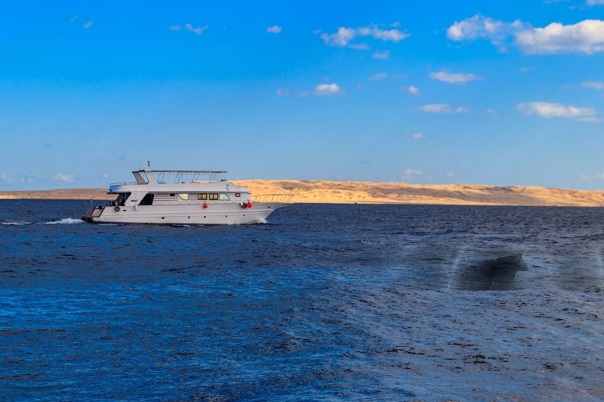
Liveboard
Liveaboards are specialized motor yachts designed exclusively for scuba diving.
Guests live on board for seven nights, moving between remote offshore reefs, sleeping, eating, and diving.The routine is that you complete three to four dives daily, including night dives.
Dives commence directly from the ship’s dive deck or via small tender zodiacs.The advatange for liveboards is to gain exclusive access to pristine offshore destinations like Daedalus and the Brothers Islands and avoid long daily boat commutes and maximize your overall dive count.
Choosing liveboards means staying in cabins that are relatively compact compared to hotel rooms. You will also stay isolated at sea for a full week, with no access to mainland shops, restaurants, and historical sites.
The Land-Based Resort
A flexible option for diving in the Red Sea Egypt is to choose resort diving which involves staying in a traditional hotel and booking either daily boat ride packages or shore dives through an authorized dive center.
The routine for land-baseddiivng involves shuttle transfers from the hotel to the marina around 8:00 AM and then spend the morning on a large day boat, complete two dives, eat lunch on board, and return to your resort by 4:00 PM.
This option is ideal for families, couples traveling with non-divers, and beginners intending to relax than staying active.
Evenings remain completely free to explore local markets, dine at mainland restaurants, or take desert excursions depending on the city you’re in.
The disadvantage with land based resort is that daily boat commutes to local reefs take one to two hours each way. As such, marine life encounters may be less due to higher boat traffic of boats along the coastline, and night diving is prohibited in coastal national parks.
Costs and Certification Requirements
Planning a successful Red Sea diving itinerary requires matching your current certification level with the structural demands of local dive sites.
Egypt stands out as an exceptionally budget-friendly diving destination due to low local operating overheads.
Certification Matrix & Experience Prerequisites PADI/SSI Open Water Diver: This foundational tier allows you to dive up to a depth of 18 metres. It provides access to all coastal reefs in Hurghada and Sharm El Sheikh.
Most land-based day boats accommodate this level perfectly.
PADI/SSI Advanced Open Water Diver
This certification extends your maximum depth limit to 30 metres. It is mandatory for navigating deep-sea shipwrecks like the SS Thistlegorm and viewing deep walls at offshore pinnacles.
Deep Offshore Rules
Egyptian maritime law requires a minimum of 30 to 50 logged open-water dives to legally access remote offshore marine parks like Daedalus and the Brothers Islands.
Night diving is heavily restricted in coastal zones, however it is permitted at offshore liveaboard locations.
Enriched Air (Nitrox) Certification
This specialty course is highly recommended for multi-day trips. Nitrox modifies your breathing gas to extend your bottom times and shorten required surface intervals, making it vital for anyone attempting three to four dives a day on a cruise.
Open Water Certification Course cost is $330 – $440 (€300 – €400) includes gear, instructor, and boat dives. Excludes PADI registration fees $80–$100.
Advanced Open Water Course cost is $250 – $380 (€230 – €350) covers 5 adventure training dives over 2 full days.
Hidden Fees and Surcharges to Account For
When preparing commercial holiday quotes or planning itineraries, look out for these common extra out-of-pocket costs
Daily National Marine Park Fees
Egypt mandates a conservation fee ranging from $5 to $10 per day for coastal reserves like Ras Mohammed, and up to $40 to $60 total per itinerary for remote offshore islands.
Renting for Equipment
Standard daily boat packages assume your own gear. Full gear rental packages (regulator, BCD, wetsuit, mask, and fins) add an extra $20 to $30 per day. Tipping crew members is deeply embedded in Egyptian travel culture. It is customary to leave a cash tip of 10% to 15% of your trip value for the boat captain and dive crew at the end of your stay.
When is the best time to scuba Diving Egypt’s Red Sea
Egypt’s Red Sea offers excellent diving conditions throughout the year, however. The migration patterns of major pelagic species and local underwater visibility tend to change significantly according to season.
March to May – Spring Season
Spring brings transitioning weather and warming waters, which sparks off the primary pelagic migration season in the northern and central regions. Water temperature ranges between 22°C to 25°C and requires a 5mm wetsuit. Marine highlights during Spring depend mostly on Plankton blooms during these months which attract elusive whale sharks and manta rays, especially around Sharm El Sheikh and Hurghada. Travel Tip: Visibility can slightly drop during peak plankton blooms, however, this is the best time for spotting massive filter-feeders.
Summer (June to August)
Summer is the peak season for spotting Hammerhead sharks. Note that there tends to be intense heat exceeding 40°C, which can trigger spectacular underwater schooling behavior at remote deep-sea pinnacles. Water temperature ranges between 26°C to 29°C requiring divers to bring 3mm wetsuit. The major marine highlights expected are large schools of scalloped hammerhead sharks that migrate up to recreational depths at Daedalus Reef to escape deep-water thermoclines. Massive schools of nesting twinspot snappers and barracuda also gather at Ras Mohammed National Park. Sea conditions are generally very calm, making for an excellent time for those prone to seasickness on liveaboards.
Autumn (September to November)
Autumn is widely considered the premium window for Red Sea diving. Given that land temperatures cool down to comfortable levels and the sea remains warm and beautifully clear.
Water temperature ranges between 25°C to 27°C, bring a 3mm or 5mm wetsuit. Marine wildlife you may see during Autumn include Thresher sharks beginning patrolling the drop-offs at the Brothers Islands. Curious oceanic whitetip sharks tend to arrive at Elphinstone Reef, and green sea turtles nest along the coastal bays of Marsa Alam. Autumn being a peak travel season requires one to secure liveaboard cabins and resort bookings at least 6 months in advance.
Winter (December to February)
The Red Sea winter brings strong northerly winds which can make sea surface rugged, making for an ideal season for advanced divers seeking high-energy action. Water temperature ranges between 21°C to 23°C and requires a thick 5mm to 7mm wetsuit, plus a hood.
Marine Highlights revolve around stronger currents that draw pelagic predators close to the reef walls. Winter offers an opportunity of spotting solitary hammerhead sharks, thresher sharks, and robust grey reef sharks patrolling the deep drop-offs. Note that land temperatures drop significantly at night. Ensure to pack warm, windproof jackets for evenings spent on boat decks.