


The Serengeti Calving season is considered to be the true highlight of the Great Wildebeest Migration. Between January and March the endless plains of East Africa transform into birthing grounds. Over a highly compressed three week window, over 500,000 wildebeest calves are born. This translates to about 8,000-9,000 calves born per day.
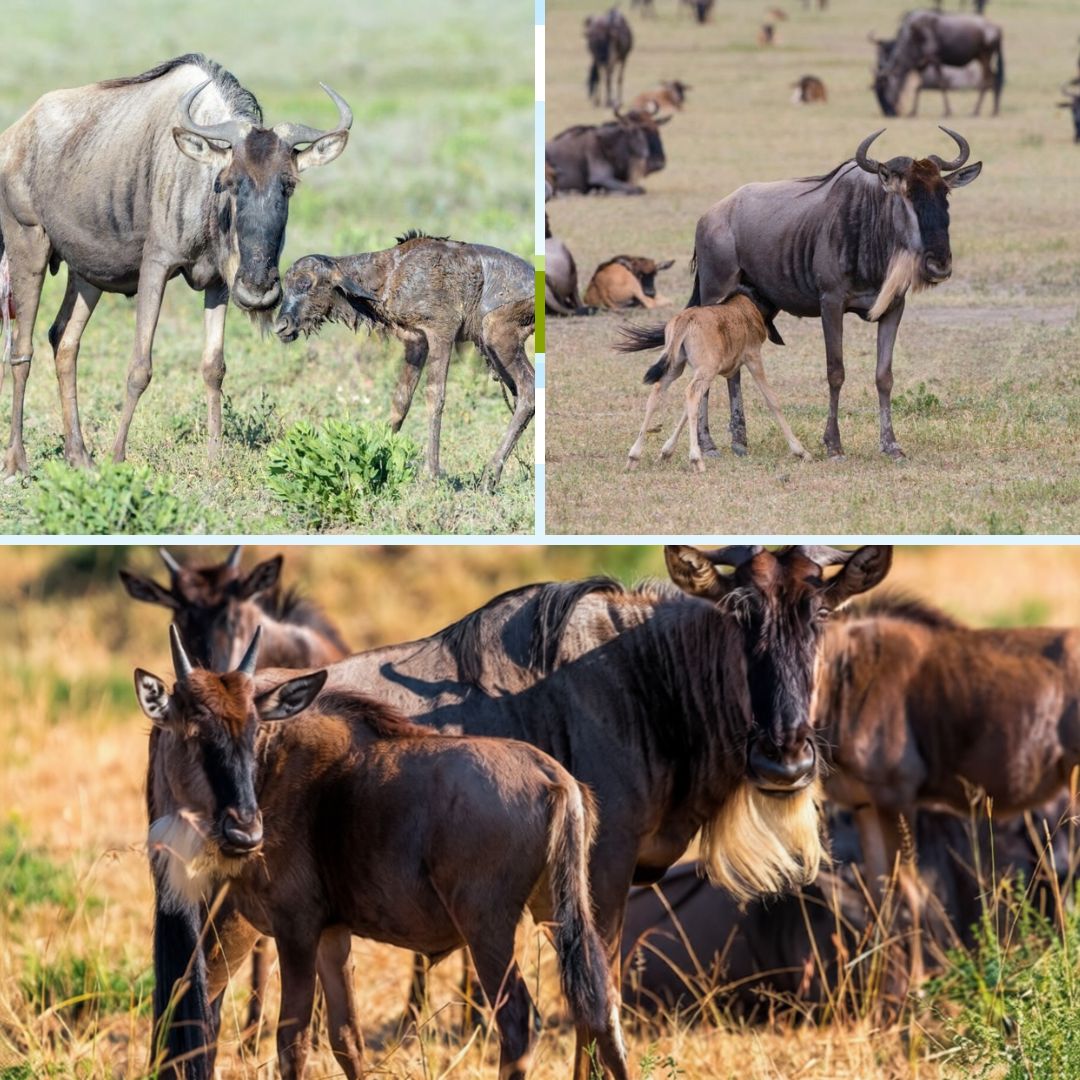
The Hidden Geography: Where is the Calving Season
The calving season takes place in the Ndutu region, which straddles two distinct conservation areas. The Southern Serengeti and Ngorongoro Conservation Area. this border area matters for your safari given that the two zones have entirely different wildlife viewing regulations. In the Serengeti national park portion of Ndutu, vehicles are strictly forbidden from leaving the safari tracks. Driver guides caught off-roading face fines. In the Ngorongoro Conservation Area part of Ndutu, controlled off-road driving is legally permitted. This allows your safari guide to manoeuvre the 4×4 closer to wildlife, giving you up-close sightings of a cheetah hunt or a live wildebeest birth.
The Science Behind the Calving: Volcanoes & Soil Chemistry
Wildebeests don’t choose the Southern plains by accident. Their movement is dectated by evolutionary biology and geological processes. Thousands of years of volcanic eruptions from the nearby Ol Doinyo Lengai (the Maasai Mountain of God), have covered the Southern Serengeti and Ndutu Plains in nutrient dense volcanic ash.
The Phosphorus and Calcium Mineral Salts
When the short rains fall in November and December, this volcanic soil produces a highly specific types of grasses which include Pan Dropseed (Sporobolus ioclados), Finger Grass (Digitaria macroblephara), and Kyllinga species, rich in calcium, potassium, and phosphorus. Pregnant wildebeests require these exact minerals during their third trimester and peak lactation cycles. The nutrients are then passed directly through milk to the newborn calves accelerating their bone growth and muscle development. Without this specific volcanic soil chemistry, the calves would not grow so strong enough to survive the 1,200-mile journey north later in the year.
The Survival Strategy: Synchronized Swarming vs Predator Density
To combat the threat of predators, wildebeest utilize a survival strategy known as predator satiation. By synchronizing their births within a tiny three week window, the herds give birth to so many calves simultaneously. The lions and hyenas simply cannot consume many at once. They become full which allows many of the newborns to survive the most vulnerable initial days of their lives.
First Steps to Survival
A wildebeest calf is one of the most precocious animals in the natural world. Within 3 to 5 minutes of dropping from its mothers womb, a calf can stand completely upright . Within ten minutes, it can run fast enough to keep pace with a trotting herd, this rapid development is critical as a calf that cannot run within its first quarter hour of life is quickly targeted by predators such as jackals and hyenas.
Where to stay: Permanent Lodges vs Mobile Tented Camps
Choosing your safari accommodation during the calving season requires understanding the difference between permanent and semi permanent camps.
Luxury mobile tented camps
These are specifically constructed to follow the movement of the Great Migration. They are set up in the Ndutu region from December to March and then packed up and moved to the Western Corridor or Northern Serengeti as the season shifts. The biggest advantage of mobile camps is that they put you in the center of the migration or along its path, where you will wake and fall asleep to the grunting sounds of the animals.
Permanent Eco-Lodges
are built with timber and concrete in fixed locations around the boundary of the plains. They offer traditional luxury amenities including swimming pools and air conditioning in the African bush. Staying there may require 1-2 hour drive to reach the wildlife viewing area if the herds move away from the area.
Month by Month Calving Guide
The three core calving months include as follows:
January the build up month is when the heavily pregnant herds settle into the Southern Plains in the tall green lush grass and early births start appearing toward the end of the month.
February, the calving peak month, is the best time to witness the mass-birth phenomenon. The plains become filled with hundreds of thousands of wobbly-legged calves. predator -prey interactions are also high, which offers the best conditions for a keen photographer. Accommodation should be booked 8-10 months in advance.
March, the transition month when the calving window is almost ending. The short grass plains begin drying out and the herds start consolidating into mega columns as they prepare to move toward the Central Serengeti and Western Corridor.
Serengeti Calving Season Frequently Asked Questions
What airport should I fly into for a Serengeti Calving Safari?
You should fly into Kilimanjaro International Airport. From there, you can transfer to Arusha and take a scheduled charter flight directly to Ndutu airstrip bypassing the bumpy full drive through Ngorongoro Conservation Area.
Is the calving season safer for children?
Yes. Wildlife viewing is entirely conducted from enclosed 4×4 safari vehicles. However, the predator-prey interactions can be intense for younger children.
How does the weather impact the experience?
The calving season takes place during a short dry spell within the broader rainy season. The weather is generally warm and clear with afternoon thunderstorms, which helps to keep the dust off and freshen the air.