


Olduvai Gorge is one of the world’s most important archaeological sites for understanding human evolution. The gorge has produced fossils of early human relatives, stone tools, and animal remains that help scientists understand millions of years of human and environmental history.
The site is famous for the discovery of Paranthropus boisei, popularly called Nutcracker Man, and Homo habilis, an early member of the human family linked with some of the earliest stone tools. Research led by Louis and Mary Leakey brought worldwide attention to Olduvai and made it a major centre for studying human origins.
Beneath its dramatic landscape are layers of volcanic ash, mud, sand among other deposits. These layers preserve evidence of early human life. They allow scientists to study fossils and stone tools together with the environments in which they were buried. Today, visitors can explore Olduvai through its museum and guided visits.
Where Is Olduvai Gorge Located?
Olduvai Gorge is in northern Tanzania, within the Ngorongoro Conservation Area. The surrounding landscape has open grasslands, volcanic features, and dry, semi-arid vegetation. Due to its location, Olduvai offers a convenient stop for travellers going between Ngorongoro Crater and Serengeti National Park. Both are major places on the northern Tanzania safari route.
Unlike a wildlife safari stop, Olduvai is mainly visited for its archaeology and geology. Visitors can learn about early human relatives, stone tools, and the environment in which they lived. The museum and viewing areas explain why the exposed layers of rock and soil are so important to science.
The name Olduvai comes from the Maasai word oldupaai, which refers to the wild sisal plant that grows in the area. The spelling Oldupai is also used locally.
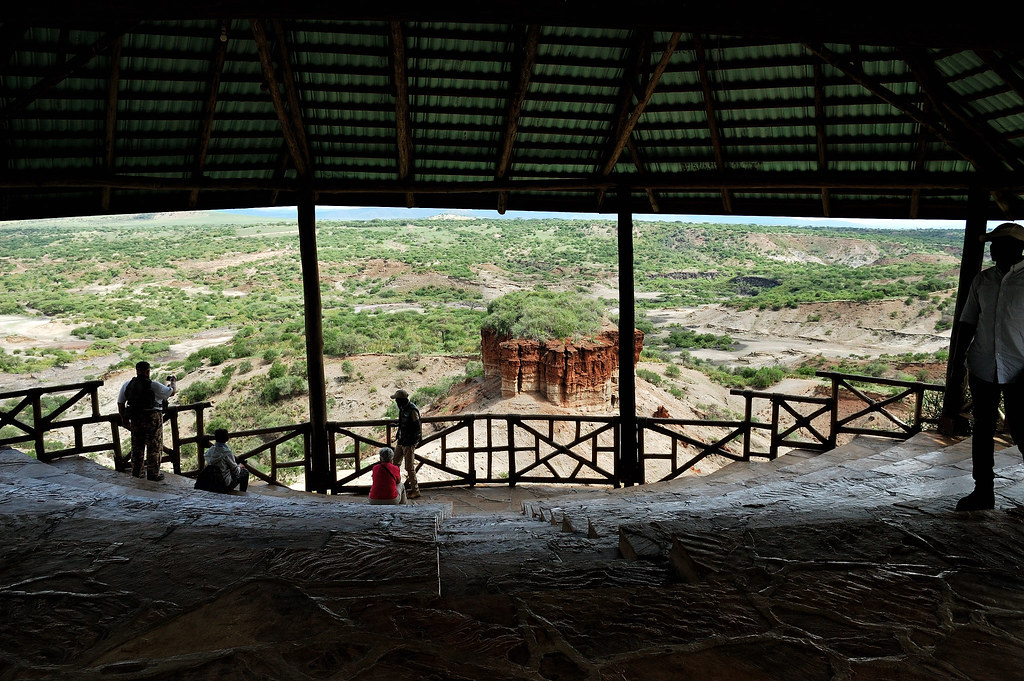
How Was Olduvai Gorge Formed?
Olduvai Gorge formed through volcanic activity, movements of the Earth’s surface, the buildup of sediments, and erosion. Over millions of years, volcanoes in the surrounding area produced ash, pumice, and lava. These materials settled in layers across the landscape.
Lakes and rivers also helped form the deposits. Mud, sand, among other sediments collected on top of volcanic material. Over time, these layers preserved animal remains, early human fossils, and evidence of human activity.
The gorge itself formed when erosion slowly cut through these layers. According to the Ngorongoro-Lengai Geopark, changes in the Earth’s surface about 30,000 years ago changed the direction of water flow in the region. This allowed rivers to cut into the volcanic deposits and create the gorge. As water removed the upper layers, older layers underneath became visible. Fossils, stone tools, and other remains that had been buried for thousands or millions of years could then be studied.
These exposed layers are central to Olduvai’s scientific importance. They preserve evidence from different periods and help researchers understand the age of discoveries, early human relatives, animal life, and changing environments.
Understanding the geology is therefore important for understanding the archaeology. Olduvai is not just a place where fossils were found. It is a geological record that helps scientists reconstruct the world in which early human relatives lived.
Archaeological Discoveries at Olduvai Gorge
Olduvai Gorge has produced some of Africa’s most important fossil and archaeological discoveries related to human evolution. Excavations have uncovered early human fossils, fossilised animals, and stone tools in layers from different periods of the past.
These discoveries help scientists study how early human species developed, what they looked like, how they used tools, and how they interacted with their surroundings.
Early Exploration and the Leakey Research
Scientific interest in Olduvai grew in the early 1900s. In 1911, the German doctor and butterfly collector Wilhelm Kattwinkel visited the area and drew attention to its fossils. Later, the German geologist Hans Reck carried out research there and helped show the site’s geological and archaeological importance.
Olduvai became internationally famous through the work of Louis and Mary Leakey, who began major research there in the 1930s. They excavated geological layers, recorded fossils, and studied stone tools and other evidence.
Their work led to discoveries that changed scientific understanding of human evolution. However, Olduvai’s discoveries did not come from one excavation or one research team. They developed over many decades through the work of different scientists, researchers, and Tanzanian specialists.
Using careful excavation methods, researchers studied how fossils, stone tools, and geological layers were connected. This helped them reconstruct parts of early human life and the changing environment of the region.
The Discovery of Paranthropus boisei
One of Olduvai’s most famous discoveries came in 1959, when Mary Leakey found a very well-preserved skull of an early human relative. The fossil was first named Zinjanthropus boisei. Today, scientists classify it as Paranthropus boisei. It is about 1.8 million years old. The skull became popularly known as Nutcracker Man due to its large jaw, broad back teeth, and strong chewing muscles. These features suggest that the species was adapted to eating tough or hard foods. However, its diet was probably more varied than the nickname suggests.
The discovery was important given that the skull was complete enough for detailed study. It provided valuable information about the variety of early human relatives and their physical adaptations. It also brought international attention to Olduvai and strengthened its reputation as one of Africa’s most important sites for studying human evolution.
Homo habilis and Early Stone Tools
Olduvai is also closely connected with Homo habilis, an early human species identified through research by the Leakey team.
The name Homo habilis is often translated as “handy man.” This name reflects its historical connection with early stone tools. Fossils of Homo habilis, together with stone tools found at Olduvai, have helped scientists study the connection between early human bodies, behaviour, and technology. The tools show that early human relatives could choose stones and shape them into implements. They may have used these tools to cut animal meat and process plant materials.
Scientists are still studying exactly which early human species made which tools without assume that every tool found at Olduvai was made by Homo habilis. Even so, the discoveries have helped researchers understand how early humans developed technology and how stone tools became part of daily life.
Stone Tools and the Archaeological Beds
The geological deposits at Olduvai are divided into several named beds and formations. Each layer represents a different period in the area’s geological and archaeological history. These layers are important because they help researchers understand the context and relative ages of fossils, stone tools, and other remains.
Archaeologists have found fossilised animal bones, early human fossils, and stone tools in different layers. By studying where these items were found, researchers can learn how early humans used the landscape, found food, and interacted with animals.
One of the most important tool traditions linked with Olduvai is the Oldowan stone-tool industry. Named after the gorge itself. Oldowan tools include simple stone flakes and cores made by striking one stone against another. Although they may look basic, they are important evidence of early technological skill and the ability to change natural materials into useful tools. These tools were useful for cutting, scraping, and processing animal and plant materials.
The importance of Olduvai’s archaeological record is not only in the objects found there. It is also in the geological and environmental evidence around them. Together, these remains give a fuller picture of early human life.
Why Is Olduvai Gorge Important to Human Evolution?
The discoveries at Olduvai have helped make East Africa one of the most important regions for studying human evolution. Together with other fossil and archaeological sites in Africa, Olduvai has provided evidence of the variety of early human relatives and the development of early technology.
The scientific importance goes beyond individual fossils. The gorge preserves a long record of changing landscapes, animal populations, stone tools, and early human activity. By studying fossils and tools together with the geological layers, scientists can learn how early human relatives adapted to different environments. Changes in plants, water, and animal populations may have affected how they found food and used their surroundings.
Olduvai is also important as it shows the value of combining different areas of science. Archaeology, the study of early humans, geology, and the study of ancient environments all help explain the evidence preserved in the gorge.
Research at Olduvai continues today. New studies and better scientific methods can provide more information about early human species, their behaviour, and the environments in which they lived. Olduvai should therefore be seen both as a place of historic discoveries and as an important site for ongoing research.
Olduvai Gorge Museum
The Olduvai Gorge Museum introduces visitors to the archaeological discoveries and geological history of the area. It helps visitors understand why Olduvai became internationally recognised as one of the world’s most important sites for studying human origins. The displays include information about early human fossils, stone tools, animal remains, and the research carried out at Olduvai. The exhibitions also explain the geological processes that formed the gorge and helped preserve its archaeological record.
The museum gives meaning to the landscape outside. Visitors can learn how different layers of rock and soil preserve evidence from different periods and how researchers use fossils and artefacts to reconstruct early human life. The visitor facilities include exhibition spaces and an outdoor viewing area overlooking the gorge. The museum also offers guided explanations about the surrounding archaeological landscape.
Museum Entry Fees and Ticketing
Visitors should budget separately for museum entry and entry into the Ngorongoro Conservation Area, unless these fees are already included in their safari package.
Fees depend on the visitor’s category, residence status, and the current conservation-area tariff.
| Visitor category | Previously quoted museum fee |
|---|---|
| Foreign non-residents | US$35.40 per person |
| Foreign residents and expatriates | US$20 per person |
| East African citizens and Tanzanians | TZS 5,000-5,900 per person |
The original fee information also quotes about US$70.80, including VAT, for a foreign non-resident adult conservation area entry permit.
These figures should not be treated as confirmed current prices. Travellers should ask their safari operator to confirm the exact charges, including any extra fees for guided visits or access to special archaeological areas.
Payments at conservation area entry points are usually made through approved electronic payment systems. Visitors should confirm the current payment process with their tour operator given that cash will not be accepted.
Opening Hours and Best Time to Visit
The museum has generally been open daily from 8:00 AM to 5:00 PM. However, opening times can change, so visitors should confirm before travelling.
Olduvai can be visited throughout the year. However, the dry seasons especially June to October and December to February usually offer better road conditions and clearer views of the landscape.
June to October is also a popular time for northern Tanzania safaris. This makes it easy to include Olduvai in an itinerary that also visits Ngorongoro and the Serengeti.
Visiting the Gorge and Excavation Areas
Visitors can explore the museum displays and learn about the archaeological discoveries through the exhibits and explanations at the site.
However, visiting the museum is different from exploring the excavation areas. Access to the gorge floor and designated archaeological locations requires arrangements with an authorised site guide. Some areas are protected research sites, and access depends on local rules.
Travellers who want to see the excavation areas should arrange this in advance through their safari operator or the official Ngorongoro Conservation Area Authority. (NCAA)