


Mount Kilimanjaro is Africa’s highest mountain, rising to 5,895 meters (19,341 feet) above sea level in northeastern Tanzania. Kilimanjaro can be climbed on established trekking routes without the technical mountaineering skills required for peaks such as Mount Kenya’s or the Rwenzori Mountains Uganda. However, its altitude makes reaching the top a demanding undertaking that requires preparation, suitable equipment and sufficient time to acclimatise.
Kilimanjaro National Park protects the mountain’s landscapes and is rich in biodiversity, including forest mammals and bird species. The mountain’s lower slopes can be explored on foot without attempting to climb the summit. Nature walks and excursions around the Shira Plateau offer alternatives for those who prefer shorter activities.
For those intending to reach the summit, choosing the right route is one of the most important decisions. The available trails differ in duration, scenery, accommodation, remoteness and opportunities for acclimatisation. Understanding these differences helps climbers select an Kilimanjaro climbing itinerary that matches their experience, fitness and travel schedule.
About Mount Kilimanjaro
Located in northeastern Tanzania near the Kenyan border, Mount Kilimanjaro is 40 km north of Moshi town and Kilimanjaro International Airport. Its summit is the highest point in Africa, and the mountain is recognised as the world’s tallest free-standing mountain. Kilimanjaro National Park was established in 1973 and inscribed on the UNESCO World Heritage List in 1987. The protected area encompasses the mountain’s upper slopes and important sections of its montane forest. Its significance comes from its volcanic structure, ecological diversity and mountain’s exceptional height that stands out above the surroundings.
Kilimanjaro’s volcanic peaks: Kibo, Mawenzi and Shira:
Kilimanjaro has three major volcanic cones which include Kibo, Mawenzi and Shira. They differ in age, appearance and geological condition.
Kibo, at 5,895 meters, is the highest cone and contains Uhuru Peak, the mountain’s highest point. Kibo is dormant meaning it has not had a major eruption in the last 150,000 years. Its round and broad summit area includes a crater, measuring about 2.5 kilometers (1.5 miles) wide (Source: Volcano World History). Remnants of both active and past volcanic activity including steam and sulfurous gases (sulfur fumes) continue to escape from vents inside the Ash Pit and inner crater. Glaciers and ice fields have historically contributed to the summit’s spectacular appearance.
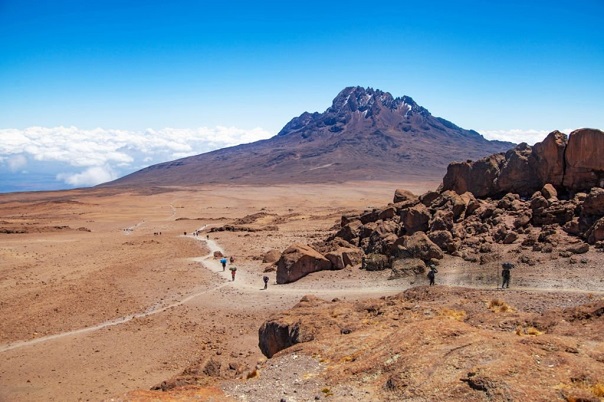
Mawenzi, rising to approximately 5,149 meters, has rugged terrain with steep ridges and jagged rock formations which stem from centuries of erosion. As such, hiking Mawezi can be challenging due to the nature of terrain. It is not part of the standard trekking ascent to Uhuru Peak. Erosion has created surfaces prone to constant rockfalls which pose extreme hazards. Kilimanjaro National Park restricts access to the peak, requiring climbers to obtain special permits, hire specialized technical alpine guides, and pay extra fees.
Shira, approximately 3,962 meters at its highest remnants, is the oldest of the three volcanic structures. Much of its original cone collapsed, leaving the broad Shira Plateau, an important feature of the mountain’s western approaches.
Together, these volcanic formations explain much of Kilimanjaro’s varied terrain, from broad upland plateaus and rocky ridges to the high summit crater.
Kilimanjaro’s vegetation zones and wildlife
Climbing Kilimanjaro involves moving through several ecological zones. On the lower slopes, there are cultivated land and settlements that give way to montane forest, where moisture supports dense vegetation, mosses and a variety of forest wildlife. Higher up, the forest transitions into heath and moorland, followed by alpine desert and the cold, exposed summit zone. Climbing through these five zones makes for an amazing adventure. The forested parts of the mountain harbour some wildlife including elephants, buffaloes, several monkey species that inhabit the wider protected landscape. Sightings are not guaranteed due to the nature of terrain. Kilimanjaro is primarily a mountain-climbing destination and not a conventional game-viewing safari park. The higher mountain slopes become increasingly dry, open and rocky. The prevailing conditions near the summit include low temperatures, strong winds and reduced oxygen availability that can create a harsher environment for climbers.
Climbing Mount Kilimanjaro
Reaching Uhuru Peak usually takes several days, with the exact duration depending on the selected route and itinerary. Climbers spend successive nights at camps or mountain huts, gradually ascending through different vegetation zones until making it to the summit. Standard trekking routes do not generally require ropes or technical climbing equipment. However the climb should not be underestimated. The main challenge is altitude. At 5,895 meters, the air pressure is much lower than at sea level, reducing the amount of oxygen available with each breath. Physically unfit hikers can develop altitude-related symptoms.
The final summit attempt begins during the night, allowing climbers to approach Uhuru Peak around sunrise when weather and conditions allow. The ascent over loose volcanic scree and cold, exposed terrain can be challenging due to the nature of terrain. After reaching the summit, climbers descend to a lower camp and continue down the mountain according to their itinerary.
How difficult is Mount Kilimanjaro to climb?
Kilimanjaro is often described as a non-technical mountain given that its established trekking routes do not normally require advanced climbing skills. However, this does not make it an easy hike. The combination of high altitude, long walking days, cold summit conditions and limited recovery time can make the expedition challenging.
Previous hiking experience is useful. However, climbers do not necessarily need a mountaineering background in order to climb Mount Kilimanjaro. Preparation should include regular walking, hill training, endurance exercise and practice with the footwear and daypack intended for the trek.
Fitness alone cannot prevent altitude sickness. A slower ascent and a longer itinerary provide more opportunity for acclimatisation, but there’s no route that can eliminate the risk entirely. Travellers should discuss their suitability for high-altitude trekking with a qualified healthcare professional before departure and follow their guide’s advice on symptoms and descent procedures.
How long does it take to climb Kilimanjaro?
Most summit itineraries take approximately five to nine days on the mountain, depending on the route and schedule. Longer itineraries are generally preferable when they provide a more gradual ascent and additional acclimatisation time.
Shorter climbs may cost less and fit more easily into a tight holiday schedule, but they leave less time for the body to adjust to increasing altitude. The US Centers for Disease Control and Prevention recommends considering an additional one or two days for the Kilimanjaro ascent to improve acclimatisation.
When comparing climbing packages, travellers should consider the number of days on the mountain, sleeping altitudes, acclimatisation opportunities and descent arrangements rather than choosing solely on price or advertised summit success rates.
Kilimanjaro Climbing Routes Compared
The established trekking routes to Uhuru Peak include the Northern Circuit, Machame, Lemosho, Rongai, Marangu, Shira and Umbwe. Each has a different environment, and the chosen route depends on the climber’s priorities.
Mweka is principally used for descending the mountain. The Arrow Glacier and Western Breach approach is a separate, more demanding option that should not be treated as an ordinary alternative to the standard trekking routes.
Northern Circuit Route
The Northern Circuit is the longest established trekking route on Kilimanjaro, commonly taking around eight to nine days on the mountain, with itineraries varying by operator. It begins on the western side, follows the Lemosho approach for part of the ascent and then traverses the quieter northern slopes joining the summit approach.
Its major advantage is the additional time available for acclimatisation. The longer itinerary also allows climbers to experience a broader range of mountain landscapes and spend time away from some of the busier trails.
The Northern Circuit is a strong option for those who have sufficient time and want a more gradual ascent. Its length can increase the overall cost, but the additional days may be worthwhile for those prioritising acclimatisation and a less hurried experience.
Machame Route: The Whisky Route
The Machame Route is one of Kilimanjaro’s most popular approaches. It ascends from the southern side of the mountain and passes through montane forest, heath and moorland before reaching the higher alpine landscape.
The route is known for varied scenery and a challenging but rewarding trail profile. One of its important features is the opportunity to climb high during the day and sleep at a lower elevation on certain stages, an approach commonly described as “climb high, sleep low.” This can support acclimatisation when incorporated into a well-designed itinerary.
The Shira Plateau, Lava Tower area and Barranco Wall are notable features along the route. The Barranco Wall is a steep, rocky section that requires careful footing and occasional use of the hands for balance, but it is a normal part of the standard Machame itinerary rather than a separate four-day extension.
Machame itineraries commonly take six to seven days, although longer versions are available. Travellers should compare the actual daily schedule and sleeping elevations before booking. Not all packages offer the same acclimatisation opportunities.
Lemosho Route
The Lemosho Route approaches Kilimanjaro from the west and is preferred for its forest scenery, spectacular views and relatively gradual progression across the mountain. It crosses the Shira Plateau and further joins sections of the southern circuit used by other routes.
The early stages pass through forest and open mountain terrain. As the route gains elevation, the vegetation becomes shorter and more specialised, eventually giving way to alpine desert. Depending on the itinerary, climbers encounter landmarks such as Shira Camp, Lava Tower and Barranco Camp on the way towards the summit.
Lemosho generally takes seven to eight days, with longer itineraries also available. Its combination of scenery, route length and acclimatisation opportunities makes it an appealing option for many first-time Kilimanjaro climbers who can allow sufficient time for the expedition.
Rongai Route
Approaching Kilimanjaro from the north, near the Kenyan border, the Rongai Route is known for its relatively dry and open landscapes and views towards the mountain’s northern slopes. The route also offers a different perspective from the more commonly used southern approaches.
Rongai can be an excellent route option during periods when the southern slopes are wetter. However, weather conditions remain variable and no route is guaranteed to be dry. Wildlife may occur in the lower areas, but encounters with large animals should not be promised as part of the climb.
The route usually takes six to seven days, with longer versions available. It is sometimes described as less demanding than Machame given that parts of the ascent are more gradual, but altitude remains a significant challenge. Travellers should choose an itinerary with adequate acclimatisation rather than selecting Rongai on the assumption that it is automatically easier.
Marangu Route: The Coca-Cola Route
The Marangu Route approaches Kilimanjaro from the southeast and is the only standard summit route with designated mountain-hut accommodation. This makes it appealing to those who prefer sleeping in huts rather than tents.
The trail winds through montane forest, heath and moorland and then the higher alpine zone. Accommodation is provided at designated huts along the route. Climbers should not expect hotel-style comfort.
Marangu is often promoted as one of the easier routes given that the sections of the trail have a relatively gradual gradient. However, its shorter standard itineraries tend to create less time for acclimatisation than longer alternatives. A five-day Marangu route ascent is especially rushed for many climbers, and a six-day itinerary is generally preferable to the shortest option when choosing this route.
Marangu is suitable for those who value hut accommodation and a straightforward out-and-back trail, provided they allow sufficient time for altitude adjustment.
Shira Route
The Shira Route approaches the mountain from the west and crosses the Shira Plateau, offering wide views across the highland landscape. It shares some terrain with the Lemosho approach but traditionally begins at a relatively high elevation.
That high starting point is an important consideration. Travellers arriving from low altitude may find the initial elevation difficult because their bodies have had little time to adjust. For this reason, the Lemosho approach is often preferable for climbers seeking similar western scenery with a more gradual start.
The Shira Route is generally less frequently selected than some of the main approaches. Its suitability depends on the itinerary, the climber’s previous altitude exposure and the time available for acclimatisation.
Umbwe Route
Umbwe is a steep and direct approach from the southern side of Kilimanjaro. It is known for its demanding ascent and comparatively rapid gain in elevation during the early stages.
The route winds through forest first and enters more exposed mountain terrain and eventually joins sections of the southern circuit. Its steep profile makes it less suitable for many first-time high-altitude trekkers, especially those without previous experience on demanding mountain trails.
Umbwe may appeal to experienced hikers who understand the physical demands, but a challenging route is not necessarily a better route to the summit. Travellers should prioritise a suitable ascent profile and adequate acclimatisation over the idea of reaching the top as quickly as possible.
Which Kilimanjaro route should you choose?
The best route depends on how much time you have, your accommodation preferences, your experience and the importance you place on acclimatisation.
| Route | Typical duration | Main attraction |
| Northern Circuit | 8-9 days | Longer itinerary and northern landscapes |
| Machame | 6-7 days | Varied scenery and popular trekking approach |
| Lemosho | 7-8 days | Western scenery and gradual approach |
| Rongai | 6-7 days | Northern approach and comparatively dry conditions |
| Marangu | 5-6 days | Mountain-hut accommodation |
| Shira | Varies | Shira Plateau and western landscapes |
| Umbwe | Varies | Steep, direct ascent for experienced trekkers |
Durations are indicative and refer to common itinerary lengths on the mountain. Operators offer different schedules, and longer itineraries may provide better opportunities for acclimatisation. The table should not be interpreted as a ranking of summit success rates.
Best Time to Climb Mount Kilimanjaro
Kilimanjaro can be climbed throughout the year, however. The weather conditions affect the experience. The most popular periods are generally the drier months, especially June to October and January to early March.
January to early March
The first part of the year often offers favourable climbing conditions, with relatively dry weather and opportunities for clear views. Temperatures remain highly variable with altitude, and rain or snow can still occur.
This period can suit those who prefer to climb before the main middle-of-the-year trekking season. Conditions vary from year to year, so forecasts and advice from the local operator remain important.
June to October
June through October is another popular climbing period. The mountain often experiences relatively dry conditions, however, nights can be cold and exposed sections may be windy.
Demand can be high during these months, especially when international travellers combine a Kilimanjaro climb with a northern Tanzania wildlife safari. Booking early can help secure a preferred route, departure date and accommodation arrangement.
Climbing during the rainy seasons
The long rains generally occur around March to May, with shorter rains commonly occurring around November and early December. These patterns are not fixed, and rainfall varies between years and across the mountain.
Wet weather can make forest trails muddy, reduce visibility and complicate camping. Some travellers nevertheless choose quieter periods, accepting a greater possibility of rain in exchange for fewer people on the trail.
Marangu’s hut accommodation may be an excellent way to sleep in wet conditions. However, it does not eliminate the effects of rain, cold or poor visibility. Travellers should select their dates according to their tolerance for variable weather and their operator’s assessment of current conditions.
Preparing for a Kilimanjaro Climb
Preparation begins well before arriving in Tanzania. Travellers should build their walking endurance, practise on hills where possible and become comfortable carrying a daypack over several hours. Training can improve physical readiness and it does not guarantee protection against altitude illness.
Acclimatisation and altitude sickness
Altitude illness is one of the main risks on Kilimanjaro. Symptoms may include headache, nausea, dizziness, unusual fatigue and loss of appetite. More serious altitude-related illness can become life-threatening and requires urgent action.
A gradual ascent gives the body more time to adjust to lower oxygen availability. Travellers should choose an itinerary that includes adequate acclimatisation time, walk at a sustainable pace and communicate symptoms to their guides. Severe or worsening symptoms should never be ignored to continue towards the summit.
Before travelling, climbers should seek medical advice about their suitability for high-altitude trekking and whether preventive medication is appropriate. Guides and operators should have procedures for recognising altitude illness and arranging descent or evacuation when necessary.
Clothing and equipment
Temperatures can change substantially between the forest and the summit. Climbers need comfortable trekking footwear, layered clothing, waterproof outerwear, warm gloves, a hat, sun protection and a suitable sleeping system for their chosen itinerary.
A headlamp is essential for the night-time summit attempt. Sunglasses and sunscreen help protect against strong ultraviolet radiation, which becomes more intense at altitude. Operators usually provide a detailed packing list based on their equipment arrangements and the route selected.
Travellers should confirm what is supplied by the operator, what must be rented and what they need to bring themselves.
Guides, park rules and responsible climbing
Kilimanjaro is a protected national park, and summit expeditions must follow the applicable park rules and access arrangements. Travellers should book through a reputable operator that uses qualified local guides, explains the itinerary clearly and has procedures for emergencies.
Responsible climbing also involves respecting the mountain environment, following designated trails, managing waste properly and treating porters and support staff fairly. The quality of the guiding team and the organisation of the expedition are important considerations alongside price.
Getting to Mount Kilimanjaro
Kilimanjaro International Airport is the main international gateway for many travellers planning a climb. The airport serves the area between Moshi and Arusha, two important bases for mountain expeditions and northern Tanzania safaris.
Moshi is particularly convenient for many Kilimanjaro departures, while Arusha is a major tourism hub with connections to other northern circuit destinations. Travellers should confirm the meeting point, transfer arrangements and recommended arrival time with their climbing operator.
Allowing a buffer day before the climb can help accommodate flight delays, equipment checks and preparation. It is also useful to avoid scheduling an international departure immediately after the expected end of the expedition, since weather, health or mountain conditions can affect the timetable.
Combining Mount Kilimanjaro with a Tanzania Safari
A Kilimanjaro expedition can be combined with a wildlife safari in northern Tanzania. The mountain and the northern safari circuit offer contrasting experiences: several days of walking through changing ecological zones followed by game drives across savannah, woodland, volcanic landscapes and wildlife-rich plains.
Travellers can use Arusha as a base for planning a safari before or after their climb. Tarangire National Park is known for elephants and baobab landscapes, while Lake Manyara offers a compact range of habitats beneath the Great Rift Valley escarpment. Ngorongoro Conservation Area adds the dramatic crater landscape and diverse wildlife, and Serengeti National Park offers extensive savannah and seasonal wildlife movements.
The order of activities depends on the travel schedule, fitness and acclimatisation needs. After a demanding summit attempt, some travellers prefer a rest day before starting long game drives. Others may choose to enjoy a safari first, followed by the climb.
A well-planned itinerary should allow enough time for both experiences rather than treating the mountain as a short excursion squeezed between flights and safari activities.
Frequently Asked Questions About Mount Kilimanjaro
How high is Mount Kilimanjaro?
Mount Kilimanjaro is 5,895 meters (19,341 feet) above sea level. Uhuru Peak on Kibo is the highest point on the mountain and the highest point in Africa.
Can beginners climb Mount Kilimanjaro?
Yes. Many people without previous mountaineering experience reach the summit using established trekking routes. However, beginners should prepare physically, select an appropriate itinerary and allow sufficient time for acclimatisation. Reaching the summit is not guaranteed.
What is the easiest route up Kilimanjaro?
There is no universally easiest route. Marangu has hut accommodation and some relatively gradual sections, while longer routes such as the Northern Circuit and Lemosho can offer more time to acclimatise. The best choice depends on the individual traveller and the itinerary.
How many days are needed to climb Kilimanjaro?
Many itineraries take approximately five to nine days on the mountain. Longer itineraries generally offer more opportunity for acclimatisation, and travellers should avoid selecting a short climb based only on cost or convenience.
Is Mount Kilimanjaro covered in snow all year?
Snow and ice have historically characterised the summit, but the extent of Kilimanjaro’s glaciers has declined considerably. Conditions at the summit vary, and visitors should not assume that the mountain will always have the same snow cover seen in older photographs.
Can you visit Kilimanjaro without climbing to the summit?
Yes. Visitors can explore authorised areas of the mountain, take guided nature walks where available and experience its lower-slope landscapes without undertaking a summit expedition. Activities and access requirements should be confirmed with the national park or a local operator.
Can you combine Kilimanjaro with the Serengeti?
Yes. Kilimanjaro climbs are commonly combined with northern Tanzania safaris that include destinations such as Tarangire, Lake Manyara, Ngorongoro and Serengeti. The number of days available and the desired pace determine which combination is practical.
Experience the Roof of Africa
Mount Kilimanjaro offers a unique way to experience Tanzania, from the forests of its lower slopes to the exposed volcanic terrain near Uhuru Peak. Its established trekking routes provide different approaches to the summit, but the most suitable itinerary is one that balances scenery, physical demands and time for acclimatisation.
For travellers with sufficient preparation and a well-organised expedition, climbing Kilimanjaro can become the centrepiece of a wider Tanzania journey. Combining the mountain with the northern safari circuit adds another dimension to the experience, bringing together high-altitude trekking, volcanic landscapes and some of East Africa’s best-known wildlife destinations.